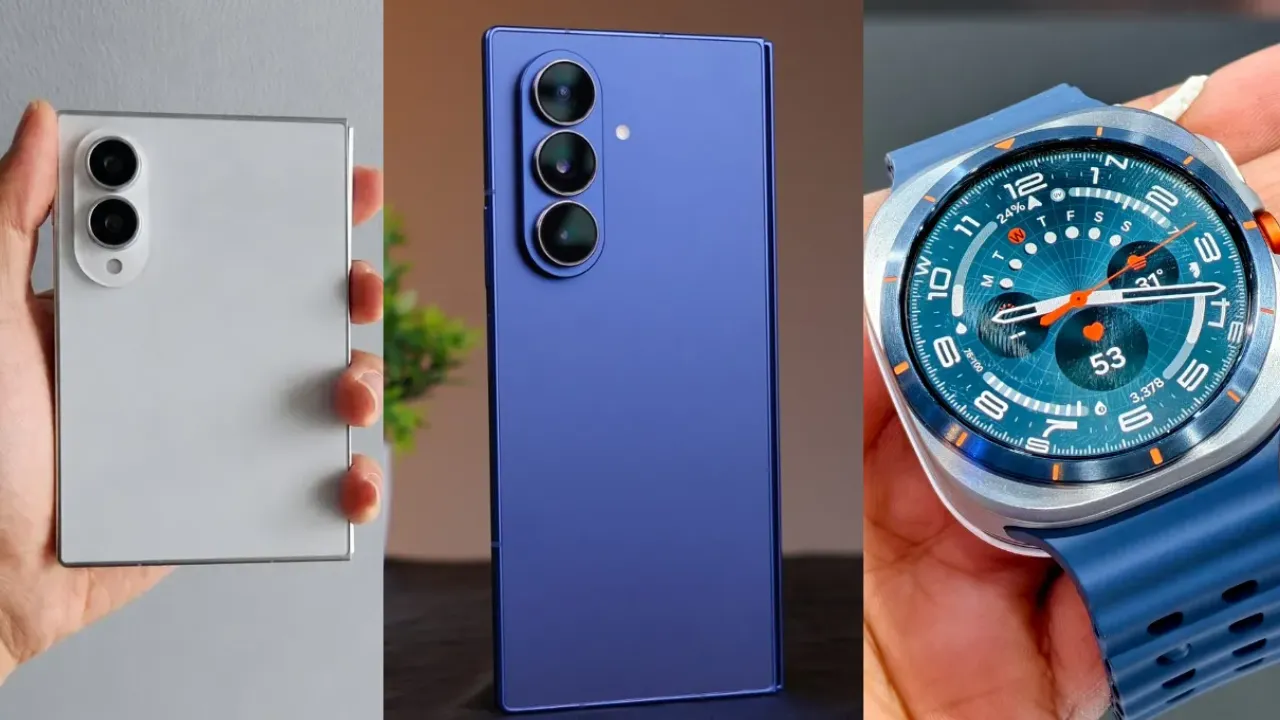
At its Unpacked event on Wednesday, Samsung is anticipated to present its next generation of foldable Galaxy phones. Rumor has it that the Z Fold and Z Flip series will undergo some major modifications. A larger, bigger Z Fold 8, a Z Fold 8 Ultra that resembles the Z Fold 7 from the previous year, and an upgraded Z Flip 8 clamshell that would continue to compete with Motorola’s Razr phone series are all possible. Samsung has been hinting at the creation of XR Galaxy Glasses for a while, and these anticipated folding phones might also be released with improvements to the Galaxy Watch line. Maybe a closer look at such a wearable will be available on Wednesday.
In this live blog, we will be tracking down all of these last speculations and compiling Samsung’s own teases for its upcoming phone lineup. We will also provide you with live coverage of the phone reveals as they take place on Wednesday morning. At 9 a.m. ET (6 a.m. PT, 2 p.m. BST), Samsung will broadcast the keynote live from London.
Samsung has previously revealed one aspect of their forthcoming foldable phones: the screen. The Z Fold 8’s primary display will be thinner, more robust, and less creased thanks to a new technology called Flex Titanium.
When I visited Samsung Display’s headquarters in Korea last month, I had an early look with the Flex Titanium displays, and I saw that the visibility of the crease had much decreased. Although I did not find the Z Fold 7’s crease to be intrusive at all, it could be a significant improvement in resolving some people’s complaints about having a distracting line running down the middle of the phone.
I witnessed Samsung testing the robustness of its screens in Korea. I observed Z Fold 8 panels being put through a machine that makes sure they can withstand 500,000 folding tests. Additionally, the panels are exposed to extreme temperatures between -20 and 60 degrees Celsius (or -4 and 140 degrees Fahrenheit) in the oven-like apparatus. If there are any problems, such as the display lifting off the device frame, engineers can investigate.
A huge, marble-sized ball is dropped onto the screens in a process known as a “ball drop test” to make sure they do not fracture. This can be reassuring when you take your expensive foldable out into the world.
Read on CNET